Posts Tagged Guide

[Infographic] A guide for family and caregivers for managing COVID-19 at home

Δεν υπάρχει διαθέσιμη περιγραφή για τη φωτογραφία.

, , ,

Leave a comment

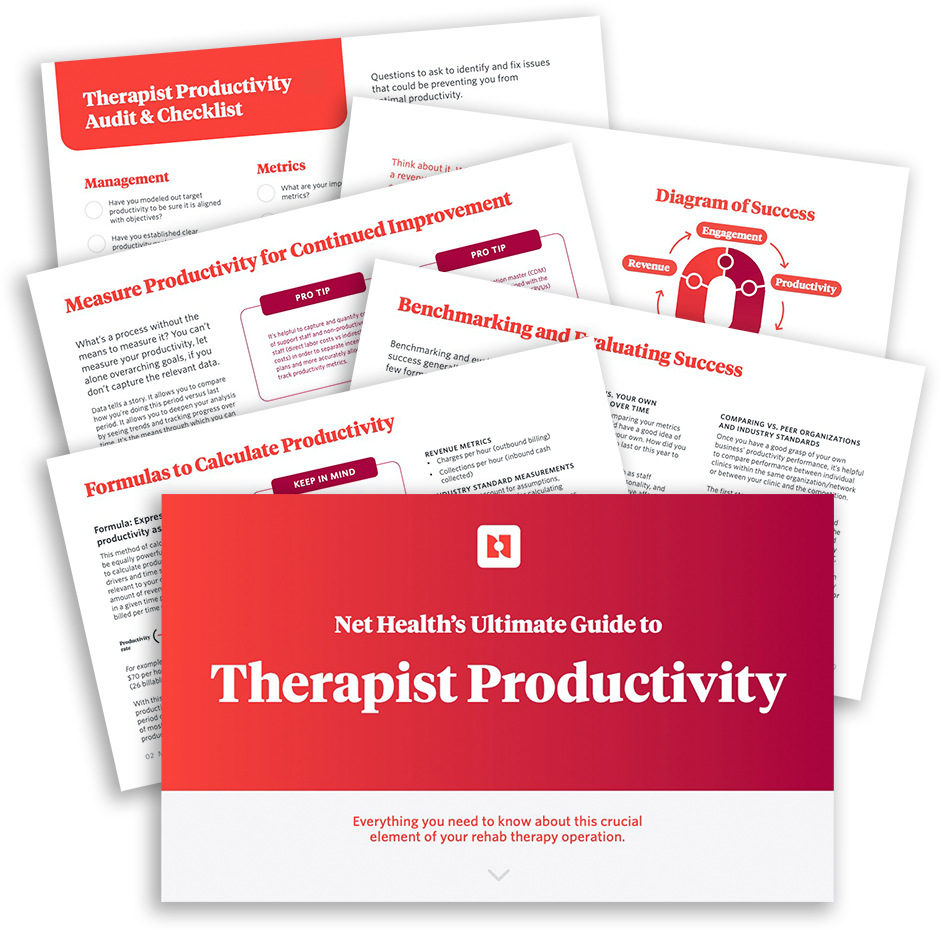
[GUIDE] Ultimate Guide to Therapist Productivity – Free Download

Ultimate Guide to Therapist Productivity – Free Download

Get instant access to 30+ pages of detailed information to help your team manage therapist productivity. This free, comprehensive guide features in-depth insights and powerful tips to help you optimize this crucial element of your rehab therapy operation.    

Get Guide

, , ,

Leave a comment

[E-BOOK] Ultimate Guide to Therapist Productivity – Download Free E-Book from Net Health

Free E‑Book Download

Ultimate Guide to Therapist Productivity

Download this comprehensive guide to get 30+ pages of detailed information to help your team manage this crucial element of your rehab therapy operation.


 Get the Guide

Download the guide for in-depth insights, including:

  • Formulas, definitions, and methods to calculate, measure, and benchmark productivity
  • Tips to improve therapist productivity and fully engage your team
  • Understanding potential downsides and pitfalls to avoid as you examine productivity
  • Productivity audit checklist and questions to ask to optimize your performance
  • Reasons why managing productivity is essential to ensure success for your facility
  • Productivity considerations to keep in mind for specific care settings
  • …and lots more!

, , ,

Leave a comment

[BOOK] The Self-Compassion Workbook for OCD – Google Books

Lean into Your Fear, Manage Difficult Emotions, and Focus On Recovery

Front Cover

Kimberley Quinlan

New Harbinger Publications, Oct 1, 2021 – Self-Help – 240 pages

A compassionate guide to help you manage OCD symptoms, overcome feelings of shame and stigma, and revitalize your life!

If you’re one of millions who suffer from obsessive-compulsive disorder (OCD), you’re all-too-familiar with feelings of anxiety, panic, shame, and uncertainty. In addition, the stigma associated with OCD can make you feel unworthy of receiving the compassion and kindness you need and deserve. You may even experience unwanted intrusive thoughts that result in harsh self-judgment—which can actually hinder your recovery and lead to additional mental health problems. So, how can you break this destructive cycle and start feeling better?

The Self-Compassion Workbook for OCD outlines a step-by-step program to help you understand the emotional experience of OCD, and develop the tools you need to manage your disorder and build a better life. Drawing on a powerful combination of cognitive behavioral therapy (CBT), exposure and response prevention (ERP), and compassion-focused therapy (CFT), this breakthrough guide will teach you how to balance intense emotions, lean into your fear, and focus on recovery. Over time, you’ll learn to replace self-judgment with kindness and self-compassion, so you can stop suffering and start thriving.

Living with OCD can be extremely challenging, but it doesn’t have to rob you of your self-worth. You are so much more than your disorder! Let this book be your guide to discovering, supporting, and loving the best you that you can be.

Preview this book »

, , , , ,

Leave a comment

[Guide] Future Planning After Brain Injury: A Guide for Family Caregivers

Why plan?

Brain injury can lead to profound changes for individuals and their families. It is often the love and support of family caregivers that provide the structure, safety, and resources to manage the associated day-to-day challenges. It is critical that family caregivers and individuals with brain injury plan for future needs. As the person with brain injury ages, so do their family-member caregivers. What happens when the family caregiver is no longer able to provide this care? According to a recent national survey, more than 50% of family caregivers have not planned for how to continue their loved one’s care in the future.1 The information provided here can help you, as a family caregiver, to prepare for the best future possible. Show that you care by planning ahead.

What plans need to be made?

 Record keeping

  • Good documentation is essential. You typically have more knowledge of the medical history of the individual with brain injury that others do not have.
  • Making sure the records can be accessed by other selected individuals is vital when you may not be able to provide the information.
  • Run the information by other individuals to ensure that they can read and understand the contents.
  • Tell other family members and close friends the plans and where to find any important records.
  • Develop a flexible and easy system to keep information and records organized.
  • Organize your records into categories, such as personal, emergency, health care, insurance, and community, as depicted below.
    • oPersonal information: Full name, birth date, birthplace, social security number, marital status, immediate family, diet, hobbies, special friends, religion, education, guardians, trustees, power of attorney, and funeral arrangements.
    • oEmergency information: Contacts (eg, family members, nonfamily caregivers, neighbors), allergies, and physician telephone numbers. Make sure those listed as contacts are aware of the plan and know where to find the information.
    • oHealth care information:
      • Provider information (name, address, and telephone numbers for current physicians, psychologist, eye care specialist, dentist, and therapists)
      • Allergies, current medications and dosage
      • Past hospitalizations
      • Medical records. Copies of medical records can be very helpful in communicating one’s medical history to other providers. You must request a patient’s medical records in writing before a medical facility can release them. Call the facility and ask them to mail you a release form. Note: Many health care providers charge for medical records by the page. To minimize cost, consider narrowing the request to include: physician admission History and Physical, physician discharge summaries, medication history, laboratory and imaging results, and physician clinic notes.
      • Maintain documentation of all interventions and medications tried, even those that were not effective or not tolerated.
    • oInsurance information: Copies of insurance cards, social security card, Medicare or Medicaid card, and Veterans Administration benefit card.
    • oCommunity information:
      • Community provider details include: mental health programs, Department of Social Services, day hospital and similar activities, case management services, and vocational programs.
      • Community activities include: church, employment, recreation programs, support groups, or volunteer work. Maintain and frequently update a list outlining the role and contact information for each.
      • Transportation resources include: agency name and contact information, payment processes, and where services are used.

 Financial and legal considerations

  • It is essential that all families, not just the wealthy, carefully plan estate distribution to secure the fullest benefits for their loved one with a brain injury. Without careful planning, estate assets can make the individual with a brain injury ineligible for government benefits. Estate planning often involves getting good legal and financial advice. Select an attorney who is knowledgeable in estate planning considerations relevant to brain injury and government benefits.2 A Special Needs Trust is an option used to create a trust and preserve Medicaid and Social Security Income eligibility without a penalty.3
  • The Achieving a Better Life Experience (ABLE) Act of 2014 allows states to create tax-advantaged savings programs for eligible individuals with disabilities.4 Look into what your state offers regarding the ABLE Act (www.ablenrc.org).
  • A guardian is needed if the individual with brain injury is unable to make financial, medical, and community decisions. There are different types of guardians.
    • oA guardian of the estate is appointed for the sole purpose of managing the individual’s property, estate, and business affairs.
    • oA guardian of the individual performs duties related to the care and custody of the individual.
    • oA general guardian has responsibility for both the individual and the estate.5
    • NOTE: When individuals turn 18, they are in control of their own affairs unless guardianship is arranged.
  • Power of attorney is an option when an individual may have decreased cognitive and functional abilities. In this case, the individual with the brain injury has the ability (capacity) to make decisions and appoints another individual to act for him/her in financial and legal situations.
  • Each state has its own rules regarding legal documents. Consult someone with legal expertise to find out what the rules are in your state.

 Living arrangements

  • It is paramount to plan for the future housing needs of the individual with brain injury. Many individuals with brain injury live with family members. Others find that the best residence is a group home, supervised living arrangement, or adult foster care. Inheritance or items of monetary value willed to an individual may affect their state or federal assistance and benefits to live in a residential facility or receive other services. This should be considered when planning for the distribution of estates.

When should I begin?

Do it now! You cannot wait for more time or less stress. No one else is going to do it for you.

How do I get started?

  • Record and organize all existing personal, medical, financial, legal, and emergency information.
  • Learn the laws of your state to receive maximum benefits and avoid loss of services.
  • Include the individual with brain injury in the planning, discussions, and decision making.
  • Table 1 provides a checklist of important points for the family-member caregiver and the individual with brain injury to discuss and set into action immediately.Table 1Planning for the future checklistRecord InformationDoneIssues to ConsiderNotesPersonalMedicalInsuranceCommunityEmergencyRequest RecordsDoneIssues to ConsiderNotesMedical recordsLegal recordsCertificates (birth, death, divorce)PlanDoneIssues to ConsiderNotesFuture housingTransportationMaintain involvement in important activities and community participationMeet With an Attorney With Expertise in Brain Injury to Prepare Legal DocumentsDoneIssues to ConsiderNotesSpecial needs trustGuardianship (if necessary)Power of attorney (if necessary)Will

Is help available?

  • The public library and Internet provide useful information on special needs.
  • Professionals and organizations that specialize in disabilities may offer help.

Where can I get more information?

Authorship

This page was developed by Flora M. Hammond, MD (e-mail address: Flora.hammond@rhin.com ); Tami Guerrier, BS, CBIST, CRA; and Sally Rickard, LRT, CTRS, CBIST.

Disclaimer

This information is not meant to replace the advice of a medical professional and should not be interpreted as a clinical practice guideline. This Information/Education Page may be reproduced for noncommercial use for health care professionals and other service providers to share with their patients or clients. Any other reproduction is subject to approval by the publisher.

References

  1. Caregiving and planning for the future for people with disabilities.(Available at:)https://thearc.org/resource/caregiving-and-planning-for-the-future-for-people-with-disabilities/(Accessed December 23, 2020)View in Article 
    • US Government Publishing Office
    21st Century Cures Act (P.L. 114-255). Section 5007. Fairness in Medicaid Supplemental Needs Trust.https://www.govinfo.gov/content/pkg/PLAW-114publ255/pdf/PLAW-114publ255.pdfDate: 2016(Accessed December 23, 2020)View in Article 
    • Marcus J.
    Five things to consider when setting up a special needs trust.(Available at:)https://www.brainline.org/article/five-things-consider-when-setting-special-needs-trust(Accessed December 23, 2020)View in Article 
  2. ABLE accounts-tax benefit for people with disabilities.(Available at:)https://www.irs.gov/government-entities/federal-state-local-governments/able-accounts-tax-benefit-for-people-with-disabilities(Accessed December 23, 2020)View in Article 
  3. Guardianship basics.(Available at:)www.eldersandcourts.org/Guardianship/Guardianship-asics.aspx(Accessed December 23, 2020)View in Article 

Article Info

Publication History

Published online: January 19, 2021

Footnotes

Supported by the NC Division of Mental Health, Development Disabilities, and Substance Abuse Services to Carolinas Rehabilitation (grant no. 2097) and the National Institute on Disability, Independent Living, and Rehabilitation Research (NIDILRR) to Indiana University (grant no. 90DRTB0002) and Carolinas Rehabilitation (grant no. 90DP00840100). NIDILRR is a Center within the Administration for Community Living (ACL), Department of Health and Human Services (HHS). The contents of this publication do not necessarily represent the policy of NIDILRR, ACL, HHS, and you should not assume endorsement by the Federal Government.

Identification

DOI: https://doi.org/10.1016/j.apmr.2020.11.008

Copyright

© 2020 by the American Congress of Rehabilitation Medicine

ScienceDirect

Access this article on ScienceDirect

Tables

Source

, , , , ,

Leave a comment

[GUIDE] A complete guide to Emotional changes after stroke – PDF file

A stroke is sudden and shocking. This guide can help you
understand the effect this could have on the way you feel.
It explains how a stroke can affect your emotions, some of the
problems that this can cause and what you can do about them.
It’s aimed at people who have had a stroke, and there is
information for family and friends as well.

Download PDF file

, , , , , , , ,

Leave a comment

[GUIDE] Where Can I Find Guides for Assistive Technology? – National Rehabilitation Information Center

Finding the right assistive technology (AT) to meet your needs can be a challenge. NARIC’s collection includes more than 65 guides and factsheets developed during the AbleData project. Each information product includes an overview of the topic, general descriptions of types of assistive technology, and recommendations for where to find additional information or support to identify, purchase, or build the right AT solution for you. The links here will take you to a description of the guide, with a link to download the PDF. We’ve included a Spanish version for any available guides. All of these guides were produced between 2013 and 2020. You may also like the catalogue of AbleData’s blog posts (PDF) featuring a variety of AT topics.

“Make your own” tech still works for many.

3D printing offers new dimensions for AT.

5 useful resources for caregivers of older adults.

AAC mobile apps for children with autism.

Adaptive strollers for children with disabilities.

Adaptive strollers for parents who use wheelchairs.

Apps for managing post-traumatic stress disorder (PTSD).

Assistive technology (AT) for the would-be virtuoso who is blind or has low vision.

AT aids for dressing.

AT can help with common post-stroke/TBI challenges.

AT can help you manage diabetes.

AT for chefs who are blind or have low vision.

AT for drawing and painting.

AT for driving: Paving the way for smoother journeys.

AT for eating.

AT for gardening: Cultivating produce and flowers with mobility limitations.

AT for golf.

AT for hikers with a mobility or lower extremity disability.

AT for housekeeping.

AT for individuals who are deaf-blind.

AT for money.

AT for parenting with a disability.

AT for preventing falls.

AT for safe bathing.

AT for self-grooming.

AT for sensory processing disorder.

AT for sewing.

AT for students with learning disabilities in elementary school.

AT for swimming: Make a splash.

AT for toileting.

AT for video gaming.

AT helps farmers keep working.

AT information and resources for veterans with disabilities.

AT vendors: What you need to know.

AT weather gear.

Biofeedback AT for depression.

Caregiver’s guide to AT for Alzheimer’s disease. (Guía del cuidador sobre TA para la enfermedad de Alzheimer.)

Controlling your cursor with AT: Adapted computer mice.

Cycling with AT for adults with a mobility disability.

Donning and removing shoes with AT.

Equestrian AT.

Fidget AT.

Find the right channel: Communication aids for people who are deaf or hard of hearing.

Guide to walking aids: Cane, crutches, and walkers.

Guide to wheeled mobility: Manual wheelchairs, power chairs, and mobility scooters.

How AT can help you at play.

How AT can help you in the workplace.

How state AT programs can help you. (¿Cómo pueden ayudarlo los programas estatales de TA?.)

Is your AT considered durable medical equipment?.

Job accommodations and AT support workers with autoimmune diseases.

Ramps.

Smart home devices bring independence.

Socially assistive robots.

Switch AT.

Take a seat: Adaptive posture support seating ang positioning chairs.

Take an active role in developing AT that works for you. (Tome un papel activo en desarrollando at que funciona para usted.)

The accessibility and mobile apps story.

The importance of standards in AT.

The past, present, and future of wearable AT.

Tips for choosing AT products for yourself.

Try AT products before you buy.

Voting success for people with disabilities.

Wayfinding AT for people who are blind, deaf, or have a cognitive disability.

What are your options to pay for assistive devices?.

Where do new AT devices come from?.

Working out with AT.

Source

, , ,

Leave a comment

[WEB SITE] Family Caregiver Guide: Introduction to Traumatic Brain Injury (Module 1) – BrainLine

The Defense Health Board, The Defense and Veterans Brain Injury Center and The Department of Veterans Affairs
Family Caregiver Guide: Introduction to Traumatic Brain Injury (Module 1)

Module 1 Summary

In this section, you can find basic information about:

  •  the parts of the brain and what they do
  •  the causes of traumatic brain injury (TBI)
  •  how the brain changes after TBI
  •  how the brain begins to recover.

You can use this information to understand:

  •  how the brain works
  •  what you might see during recovery
  •  why you might see changes in how your service member/veteran
  •  thinks and acts due to a TBI.

TBIs are classified by how severe or serious they are at the time of injury. TBIs range from mild (concussion) to moderate to severe.

This module provides information on moderate to severe TBI. Doctors, nurses, and other health care providers who work with TBI guided
content.

As you read through this document, ask your health care providers to explain what you don’t understand.

Some key points are:

  •  The brain is the body’s control center.
  •  The parts of the brain work together to help us think, feel, move, and talk.
  •  A TBI is caused by a penetrating injury or by blunt force trauma to the head.
  •  TBI is very common in both civilian and military populations.
  •  Many different health care providers will help diagnose and treat your service member/veteran with TBI.
  •  It is the goal of health care providers to minimize complications, the things that can go wrong after the injury.
  •  Many service members/veterans with TBI go through common stages of recovery. Each person, however, progresses at his or her own pace.
  •  Recovery from a TBI may be measured in weeks, months, or years.
  •  Promising new research is showing the brain’s capacity for healing.
  •  There are many ways you can support your service member/veteran with TBI throughout his or her recovery.

Be hopeful. The brain is very good at repairing itself.

Read some of the chapters in this module:

Posted on BrainLine July 5, 2012.


via Family Caregiver Guide: Introduction to Traumatic Brain Injury (Module 1) | BrainLine

, , ,

Leave a comment

[Guide] LIFE AFTER STROKE Our Path Forward – American Stroke Association

THERE IS LIFE – AND HOPE – AFTER STROKE. WITH TIME, NEW ROUTINES WILL BECOME SECOND NATURE. REHABILITATION CAN BUILD YOUR STRENGTH, CAPABILITY AND CONFIDENCE. IT CAN HELP YOU CONTINUE YOUR DAILY ACTIVITIES DESPITE THE EFFECTS OF YOUR STROKE.

If you are the caregiver, family member or friend of a stroke survivor, your role is vital. You should know the prevention plan and help your loved one to comply with the plan. With a committed health care team and a rehabilitation plan specific to their needs, most stroke survivors can prevent another stroke and thrive.

We hope this guide will help you and your loved ones understand the effects of stroke and how to maximize your rehabilitation and recovery.

Download PDF file

, , , , , , , , , , , , ,

Leave a comment

[WEB SITE] Disability.gov’s Guide to Assistive & Accessible Technologies

Disability.gov’s Guide to Assistive & Accessible Technologies

Assistive technology (AT) “includes any item, piece of equipment or product system, whether acquired commercially, off the shelf, modified or customized, that is used to increase, maintain or improve the functional capacities of people with disabilities.” AT can be low-tech, such as a magnifying glass, or high-tech, such as computer software. There are many different types of AT and adaptive equipment to help people with disabilities live independently and participate in the classroom, workplace and in their communities.

Here are some “quick links” to get you started:

The Technology section of Disability.gov has a broad range of resources about assistive technology. In addition, we have developed this guide to connect you with programs, services, government agencies and organizations that can help you find and pay for AT. To learn about technology related laws and regulations, including the Assistive Technology Act (“Tech Act”), visit “Disability.gov’s Guide to Disability Rights Laws” or the Technology Laws & Regulations section of the website.

For more information about AT, check out the following sections of “Disability.gov’s Guide to Assistive Technology”:

Return to Disability.gov’s Guides to Information.

via Disability.gov’s Guide to Assistive & Accessible Technologies – Disability.gov.

, ,

Leave a comment